Energy Stuff - Solar Systems, Solar System Repairs, New Systems, Upgrades & Monitoring

NSW lifts solar feed-in tariff range, as electricity prices refuse to fall

NSW lifts solar feed-in tariff range, as electricity prices refuse to fall

Written by Sophie Vorrath / One Step Off The Grid / 29 April 2019

Solar households in New South Wales could soon be paid more for the rooftop generated power they export to the grid, after the state’s recommended feed-in tariff benchmark was raised from the 2018-19 range of 6.9-8.4c/kWh, to 8.5-10.4c/kWh.

NSW pricing regulator IPART said last week that it had decided to boost the recommended FiT range for the 2019/2020 period by around 2c/kWh to keep it in line with the wholesale electricity price, which was forecast to move higher.

The increase in the benchmark rooftop solar FiT range – which serves only to guide retailers, and is entirely voluntary – comes a year after it was controversially slashed by some 44 per cent, from 11.9-15c/kWh in the 2017/18 period to 6.9-8.4c/kWh.

As we reported at the time, IPART justified the cut in the solar FiT by reasoning that wholesale electricity prices were forecast to fall in the coming financial year.

This reasoning was not received well, however, with critics noting that falling wholesale electricity prices could be at least partly attributed to the market impact of rooftop solar.

Now, with electricity prices forecast to go up, so is the recommended FiT range. But IPART still argues that solar households should not be rewarded financially for any benefits their investments might bring to the broader grid, through reducing emissions in the electricity sector, shaving daily peak demand, or avoiding the need for costly infrastructure builds.

In its report published on Friday, the pricing regulator said that while solar panels could help reduce wholesale prices during the day by increasing the supply of electricity in the market, this in turn could cause other generators to exit the market faster, leading to higher prices.

And it pointed to recent reviews by the AEMC and the Victorian Essential Services Commission (ESC) which found that potential network benefits were too variable between location, across times, and between years to be well suited for remuneration via a broad‐based solar tariff.

“Like the other generators that impact prices, solar customers should not be additionally compensated or penalised for their impact on wholesale prices,” IPART says.

“For example, a new gas generator or wind turbine that contributes to reduced wholesale spot prices does not receive any additional payment to reflect the lower wholesale price. It takes the same market price as all other generators, and so all customers benefit from lower prices.

“Likewise, a customer who consumes electricity by switching on an appliance and thereby increasing the market demand for electricity and electricity prices for all customers is not required to compensate the other customers for these higher prices. These are normal outcomes of a competitive market.”

IPART also argues that forcing retailers to pay a higher feed-in tariff to solar households in New South Wales would result in higher costs to retailers, which would mean a roughly $45/year increase in prices across the board, including to non-solar homes.

“Households without solar panels should not have to pay even higher retail prices to reduce the bills of customers with solar panels,” the IPART report says.

“This would disadvantage the households who are unable to install a solar system themselves (for example, because they rent or they cannot afford the upfront costs).”

All that said, the table below – also published by IPART – shows that most retailers in NSW are actually paying a solar feed-in tariff to customers that is higher than the recommended range. In some case, quite a bit higher.

A further table published by IPART (below) shows the range of time-dependent solar feed-in tariff benchmark ranges recommended by IPART – a measure it brought in in the 2018/29 period under request from the state government.

The “specifically requested” change, as IPART explained last year, means retailers can choose to offer a tariff that varies depending on the time of day the solar customer exports to the grid. But as IPART noted in its report last week, most retailers are choosing to ignore this option.

“Retailers may offer different feed-in tariffs throughout the day to reflect (the daily) variation in wholesale prices,” the report says.

“Our time-dependent benchmarks provide guidance about the value of exports at different times. But retailers do not have to offer a time-dependent option for customers, and most are continuing to only offer an average rate for all exports.”

Energy Stuff specialises in Residential Solar with emphasis on Repairs, Replacements and upgrades. We also provide new systems, battery storage, Small Commercial, Off-Grid systems and smart monitoring systems. Energy Stuff only uses CEC accredited installers and we fully comply with the Victorian Govt. Solar Rebate Program.

For further information please call us on 1300 656 205 or go to our website at http://www.energystuff.com.au

Labor pledges solar panels for schools in $1 billion program

By David Crowe April 30, 2019 , The Age

Labor will pledge up to $1 billion to install solar panels at thousands of public schools in an ambitious scheme to create “virtual power plants” that put energy back into the electricity grid.

Opposition Leader Bill Shorten will outline the plan on Tuesday with a claim it could “drive down electricity bills for households and businesses” as well as help schools cut their energy bills.

The plan seeks to use the existing Clean Energy Finance Corporation, a government fund set up a decade ago, to offer concessional loans to energy companies to use the schools to generate power.

Behind the idea is the assumption that “virtual power plant” developers will come up with commercial projects using the school rooftops to generate electricity not only for the school but for the grid.

The scheme will begin with two or three trial projects in different regions but is intended to be scaled up to the point where the “solar schools” have a combined capacity equivalent to one fifth of the Liddell coal-fired power station in NSW.

“The full rollout will see school VPPs established in every jurisdiction, ultimately benefiting up to 4,000 schools, supporting up to 364 megawatts of VPP capacity, and cutting over 390,000 tonnes of pollution a year,” Labor says.

The Liddell power station has a capacity of 1680 megawatts and is due to close in 2022.

The election promise is worded carefully to avoid a hard commitment on when all the money will be committed, saying a Labor government will benefit “up to 4,000 schools” with “up to $1 billion in finance” from the government corporation.

“Schools are largely vacant for more than 150 days per year. Often demand for energy is highest when kids are not at school,” the Labor policy plan says.

“This makes schools perfect locations for solar and battery powered VPPs, to support grid reliability and lower power prices for Australian families and business.”

The idea is a significant commitment from the CEFC, which until now has had a mandate to generate a commercial return from loans.

Labor said it was “not relevant” to ask if the proposal would require a change in the mandate because the CEFC would be able to make a commercial return from the projects.

Labor noted that the CEFC had to make its benchmark rate of return across its portfolio of investments, which is different from the required rate of return for the private finance industry.

“Financing will be provided through concessional loans, available for the purchase of both solar panels and battery systems, either by schools or VPP project developers,” Labor said.

The mammoth outlay will use government debt under Labor’s pledge last November to add $10 billion to the CEFC to expand its investments.

The increase in commonwealth debt will be offset by the value of the solar school investments, which means net debt would not change unless some of the investments failed.

Aware of controversy over the home insulation scheme developed by the Rudd government, Labor said all installations in the schools program would be undertaken by certified installers and in compliance with the National Construction Code and the Clean Energy Council installation guide.

Energy Stuff is an Australian owned, one-stop energy cost reduction solution provider. Our multi-disciplined teams have proven success in helping Australian businesses across different industries in reducing up to 70% of electricity costs with our tailor-suited turnkey solutions. We do this by combining solar power, energy efficiency upgrade, power quality improvement, PPA, and more. Furthermore, we are a key channel partner of one of Australia’s leading solar and electrical product wholesalers with various industry leading manufacturers, asset financiers, and EPC contractors being our technology partners.

Our collective strengths offer your business a guarantee of industry-leading quality and performance, and ongoing maintenance capabilities.

We aim to give Australian energy consumers more choice and easier access to the benefits of new energy solutions.

Find out more about our business PPA’s

https://ongrid.energystuff.com.au/solar-for-business/

New type of silicon promises cheaper solar technology

Phys Org / 25 April 2019

An international research team led by The Australian National University (ANU) has made a new type of silicon that better uses sunlight and promises to cut the cost of solar technology.

The researchers say their world-first invention could help reduce the costs of renewable electricity below that of existing coal power stations, as well as lead to more efficient solar cells.

Senior researcher ANU Professor Jodie Bradby said silicon was used as the raw material for solar cells because of its abundance, low-cost and non-toxicity.

“But the standard form of silicon does not use all available sunlight,” Professor Bradby said.

“Just by poking silicon with a tiny hard tip, we’ve created a more complex silicon capable of absorbing more sunlight than the standard type commonly used in solar cells.

“We have proved that we can easily make this new kind of silicon—previously thought unobtainable under normal room temperature and pressure—which could be used for making more efficient solar cells and lead to cheaper energy.”

Dr. Sherman Wong, who worked on the study for his Ph.D. at ANU, is the first author of the paper published in the journal Physical Review Letters.

He said the team was exploring a little-known property of silicon—its ability to exist in different crystal forms.

“Silicon can also take many crystal forms that have different and useful properties,” said Dr. Wong, who is now at RMIT University.

“The new type of silicon we’ve created is called r8-Si. Instead of the atoms being square or cubic like in standard silicon, it’s more complex—shaped a bit like a diamond on playing cards, only it’s in 3-D.

“It’s an exciting field and there is a multi-billion dollar industry built around silicon manufacturing, so silicon is a super important material that’s worth optimising.”

Professor Bradby said the team would use unique high-pressure facilities at ANU to develop ways of making enough material to produce a prototype solar cell.

“We now need to measure how well this material absorbs light and behaves electrically,” she said.

“We also need to scale up and then work on integrating this material into existing solar industries. This will take another three to five years.”

The shape and complexity of the r8-Si was measured using X-ray diffraction at the Advanced Photon Source in the United States. The study was conducted with a large group of colleagues at the University of Melbourne and several overseas organisations.

Energy Stuff specialises in Residential Solar with emphasis on Repairs, Replacements and upgrades. We also provide new systems, battery storage, Small Commercial, Off-Grid systems and smart monitoring systems. Energy Stuff only uses CEC accredited installers and we fully comply with the Victorian Govt. Solar Rebate Program.

For further information please call us on 1300 656 205 or go to our website at http://www.energystuff.com.au


Australians Backing Electric Vehicles

Written by Michael Bloch / SQ Blog / 17 April 2019

Results from two recent polls indicate many Australians are on board with accelerating an electric vehicle revolution across the nation.

Early this month, Labor announced its National Electric Vehicle (EV) policy; elements of which include:

  • A national electric vehicle target of 50 per cent of new car sales by 2030.
  • A government electric vehicle target of 50 per cent of new purchases and leases of passenger vehicles by 2025.
  • Provision of an upfront tax deduction to purchase electric vehicles for business purposes.
  • All federally-funded road upgrades to incorporate electric vehicle charging infrastructure.

Labor’s EV policy may have the Coalition frothing at the mouth, but it seems the Coalition is again out of touch with what Australians think – and even Labor may have underestimated the desire for EVs. The interest in electric cars is looking very much like the interest in solar power in the early days, or more recently, solar batteries.

News.com.au reports a YouGov Galaxy online survey of 861 eligible voters taken between April 10 and 11 found 62 per cent of respondents either supported Labor’s EV policy or thought it should go even further. Approximately 68 per cent either own or expect to buy an electric car in the future. Full results of the survey were yet to appear on the YouGov site at the time of publishing.

50% Support 100% EV New Car Sales By 2025

Last week, The Australia Institute (TAI) published results from a poll indicating half of voting Australians support shifting all sales of new vehicles to electric vehicles by 2025, with just 28% opposed.

62% also supported a government-led program to an electrically charged transport system – including 55% of Coalition voters, 71% of Labor voters, 78% Greens voters, and 54% ‘other’ voters. Only 16% of respondents were opposed to this idea.

“Instead of driving Australia backwards by preserving our gas-guzzlers, any future Government should look to the fine example of countries like Norway who already reached 50% of new car registrations as EVs in 2018 by using popular public incentives to accelerate electric vehicle uptake,” said TAI Climate & Energy Program Director Richie Merzian.

Details of how Norway has achieved this can be found in this TAI report.

“Our Nordic Policy Centre report shows with the right policy settings from Government, citizens are more than willing to purchase electric vehicles over a petrol car.”

The Australia Institute survey was conducted with 1,536 people between 20 February 2019 and 4 March 2019.

Energy Stuff provides a full range of new smart solar systems which can include battery ready inverters or systems with integrated battery storage. All our systems come with smart energy management to provide real time monitoring and energy efficiencies. Finance options are available, simply ask our knowledgeable staff for details.

For further information call 1300 656 205 or go to our website at

https://ongrid.energystuff.com.au/new-solar-system/

Victorian solar companies reeling after popular rebate scheme halted temporarily

Written by Sheryl Hall & Bridget Rollason / ABC News / 24 April 2019

A number of Victorian solar companies are laying off staff after the Victorian Government placed a temporary freeze on a solar panel rebate program.

The $1.3 billion solar homes package started last August and has been so popular that the rebates for this financial year have been fully subscribed.

“We’ll spend the next few weeks processing existing applications in the system and working with the industry to complete the outstanding installations,” a Government spokesperson said.

There are currently more than 30,000 applications in the system and 10,000 rebates have already been paid.

A wider program will be rolled out on July 1 this year which will have, “even more rebates available, along with zero interest loans”, the spokesperson said.


PHOTO: The Victorian program has been so popular it has been oversubscribed. (Supplied: Quality Solar NT)

However, since the freeze on new applications came into effect, the work for solar-installation companies like Sky Energy Systems of Melbourne has dried up.

The business’s directors, Sam Kent and Ross Howard, said they had no choice but to cut just over half the company’s staff when customers started cancelling their orders.

‘We’re talking about how many will be let go’

Twenty-five people have been told to finish up work on Friday and another 15 staff could go in two weeks’ time.

“Having no sales is like having no oxygen. You can’t breathe. There’s no business so it’s devastating,” Mr Kent said.

The company employed 40 full-time staff in Keysborough and last year won an industry award as top installer.

“Unfortunately we’ve had to make some tough calls. I’ve actually just got out of a meeting with management where we’re talking about how many will be let go,” Mr Kent said.

“It’s been quite dramatic, not only the cancellations but now the stagnation in sales.

“We do about 20 installations a week and the average sale is about $10,000. About half of those cancelled immediately.”

The Government spokesperson said there was still some work around for businesses, but Mr Kent said it was only enough to tide them over for about two weeks.

Businesses ‘shocked’ by lack of warning

Sunrun Solar owner Tarak Shah had to lay off five of his 10 full-time staff from his Mount Waverly company this week.

“At first when it happened, I couldn’t sleep for a couple of nights, because you think of your staff as your family because they have their own families as well and they’re going to find it really hard,” he said.

“We’re getting to the point where we’re getting no business at all, customers just want to wait for the rebate, so nobody wants to sign up.”

“It’s going to be a really hard couple of months as a small business owner.”

Mr Shah lost eight customers overnight, when the Government announced the freeze.

He said he knows of three solar companies in Melbourne that have had to close their doors completely in the past week.

“You just think, ‘Is it really worth it to keep going? Or should I just shut the door and walk away from the business?’,” he said.

“It was a massive surprise, there was no communication from the Government that this is what they were planning to do, we expected we would have got a bit of notice as business owners, so we could plan ahead — it was a shock to the industry.”

No sales, no business

A petition has been launched on the change.org website calling on the Victorian Government to reconsider the temporary rebate halt.

“Because consumers know that the rebate will return on July 1, they will be holding off making a purchase,” the petition said.

“For these small businesses to survive 15 weeks without sales is unlikely.”


PHOTO: Sky Energy Systems staff Vanessa Bomba and Amy Elizabeth face an uncertain future. (ABC News: Cheryl Hall)

Mr Kent said many other solar companies are based interstate, and use subcontractors in Victoria.

“They’ll disappear interstate until the rebates come back. They are companies that are basically rebate-based so they follow the rebates,” Mr Kent said.

“The other half of the parties are like us, or Mum-and-Dad-type operators who do very-high-quality work.

“For everyone here it’s a mission and as I said we’re a young team and we feel like we’re pulling together to make a difference in the solar industry.”

Mr Kent said the business had shrunk to a skeleton crew and if they survived the next few weeks they would move the business away from residential rebates because the system had become “too volatile”.

Opposition energy spokesman Ryan Smith said the State Government should find the money to continue the scheme until the end of the financial year.

“The problem with the way this has rolled out is that the cap was a surprise to the industry,” Mr Smith said.

“Daniel Andrews needs to step up, acknowledge that his ministers made a wrong decision and either keep the rebates going or detail to business how he’s going to support them, and indeed how he’s going to support the dozens of workers who are now without work.”

Solar industry ‘distress’

CEO of the Clean Energy Council Kane Thornton said the Victorian Government should reallocate some of the funding set aside for the next financial year, to use over the next two months.

“Freezing the rebate program has caused great distress in the industry,” he said.

“I’ve spoken to many businesses, many of them in rural and regional Victoria that are feeling the pain and have already started to reduce the number of people that work in their businesses.

“That’s ultimately because the sales of solar systems will come to a grinding halt through this 10-week period and unfortunately this means these businesses will lose revenue and they’re going to have to take some pretty drastic action as a result.”


PHOTO: Kane Thornton says solar businesses, especially in regional Victoria, have been hard hit by the temporary rebate freeze. (ABC News)

Energy Stuff specialises in Residential Solar with emphasis on Repairs, Replacements and upgrades. We also provide new systems, battery storage, Small Commercial, Off-Grid systems and smart monitoring systems. Energy Stuff only uses CEC accredited installers and we fully comply with the Victorian Govt. Solar Rebate Program.

For further information please call us on 1300 656 205 or go to our website at http://www.energystuff.com.au
After 95,000km and 33 countries, Dutch EV evangelist needs a recharge

Published on EcoGeneration / 18th April 2019

Sometimes a man (or a woman!) has to break free of life’s shackles and hit the road. Peeling away from the city he becomes energised as the traffic lights fade in his rear view mirror. The tarmac becomes the anvil, the engine the iron, the right foot the hammer. As the wind rips through his hair and The Doors blasts from his car stereo his spirits soar, the possibilities blossom and his soul is repaired.

A day or two later he’ll ease back into his suburban parking spot with a bag of groceries … and it’s back to the treadmill.

But not Wiebe Wakker. When he hits the road he means it – with a purpose and determination that saw the 32-year-old Dutchman spend 1,119 days winding his way from The Netherlands to Australia’s east coast, all in the cause of spreading the good news about electric vehicles.


Dazzled by Dubai!

“It was great, the trip of a lifetime,” Wakker tells EcoGeneration after reaching his final destination, Sydney, in April. “You wake up and have no idea where you will sleep that night or if you will get some food. You just go on an adventure. That’s been the most interesting aspect of my trip.”

Wakker left home in March 2016, driving a borrowed 2009 Volkswagen retrofitted with a 150kW electric motor and 37kWh battery. “That’s the only thing I know about the car,” he says. He also had no money in his pocket, the idea being that kind folk who’d heard about his plight would go to his website and offer to put him up, feed him and let him plug in and charge up – before rolling on in the morning.


Negotiating the Indonesian archipelago.

Thirty-three countries and 95,000km later he is a man of the world. “I met a lot of interesting people, very random people, different kinds of characters – I didn’t expect so many people to sign up,” says Wakker, whose usual gig is events management. “I was not in a race; I wanted to enjoy this trip, take time to see places, to meet people, and take time to promote electric cars. I just travelled from plug to plug and lived day by day.”

When it came time to cross bodies of water Wakker would put down roots and earn money for a ferry ride to the next landmass; so it was with three months in Dubai, four in Malaysia and three in Indonesia, when the car needed some repair work.


Taking a break in Iran.

The start of the trip was the hardest stretch, he says. “Mainly in Europe it was tougher because not many people had signed up yet. I spent a lot of time knocking on doors, asking if they could give me a charge or to share a meal. Sometimes I have to ask someone for toothpaste. I’ve been using a lot of fast food restaurants to go to the toilet. Road houses in Europe often have a shower as well, and I’d use that if I had not had one for a few days.”

Were there times when he suffered ‘range anxiety’? “Only in Australia, because the distances are vast over here. There were times when I needed to cover a bigger distance than the range of my car.” (We’re not sure how he managed that.)


Crossing a tropic…

The nicest people were encountered around the middle of Wakker’s circuitous route, he says. “The hospitality in Asia is from a different level. Countries like Iran, India or Indonesia are some of the easiest places to travel around. People are so hospitable and friendly and generous there.”


It was cold in Turkey that morning.

Halfway around the world on four wheels is a major achievement, so why not ship the VW to San Diego and whizz across the United States and make it a world tour? “No, I think not. I’ve been on the road for three years and it really begins to take its toll. I really want to do something different.”

It’s time for a recharge…

Energy Stuff specialises in Residential Solar with emphasis on Repairs, Replacements and upgrades. We also provide new systems, battery storage, Small Commercial, Off-Grid systems and smart monitoring systems. Energy Stuff only uses CEC accredited installers and we fully comply with the Victorian Govt. Solar Rebate Program.

For further information please call us on 1300 656 205 or go to our website at http://www.energystuff.com.au

Jinko Solar takes out fifth consecutive award for panel yield

Published on EcoGeneration / 18 April 2019

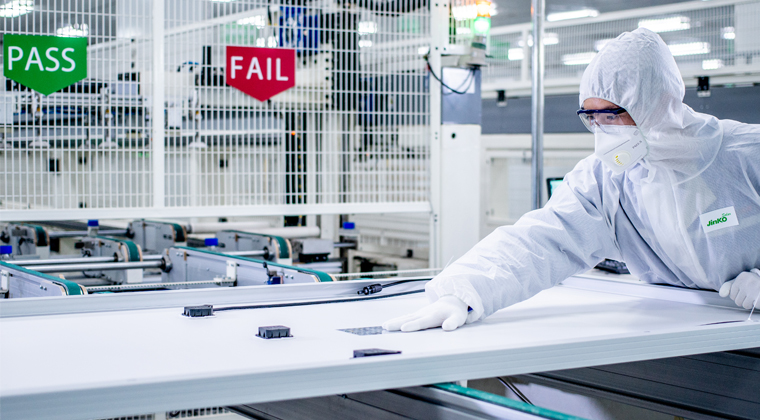
Jinko Solar has won its fifth All Quality Matters Award for PV Module Energy Yield Simulation (Mono Group) at the Solar Congress 2019 organized by TÜV Rheinland.

Evaluation of energy yield simulation is based on performance testing of samples randomly selected from mass production under global conditions that range from irradiance of 100-1100W/m2 and temperatures of 15-75°C.

JinkoSolar ranked first in testing conducted for the mono group and was recognized for outstanding energy yield and its high quality standards.

Solar panel quality is the key to ensure the real electricity output in the field and secure PV project investment, the company said in a statement. A low-quality solar panel will meet a series of module failures like micro-cracks caused by the vibration during transportation, and backsheet failures caused by ambient humidity or ultra-violet radiation, reducing power output.

Independent third party DNV GL performs ageing tests at a more stringent standard than the IEC certificate, in order to highlight the ultimate reliability performance under the extreme outdoor conditions.

Jinko Solar has been the top performer for four consecutive years since 2014.

Energy Stuff specialises in Residential Solar with emphasis on Repairs, Replacements and upgrades. We also provide new systems, battery storage, Small Commercial, Off-Grid systems and smart monitoring systems. Energy Stuff only uses CEC accredited installers and we fully comply with the Victorian Govt. Solar Rebate Program.

For further information please call us on 1300 656 205 or go to our website at http://www.energystuff.com.au

Vic Solar PV rebates are closed and will re-open on 1 July 2019

All solar PV eligibility and rebate applications lodged before applications closed will continue to be processed by Solar Victoria, in line with current requirements. 

___________________________________________________________________________ 


If you have submitted an eligibility application and you haven’t received an eligibility number, wait until you receive an email from VIC Solar confirming your eligibility number before installation. 
 
If you have already received an eligibility number and haven’t installed your system, you can continue to get a system installed and then apply for a rebate.  
 
If you have submitted a rebate application, it will continue to be processed, in line with current requirements. 
 
If you have not received an eligibility number before you have installed a solar PV system you CANNOT APPLY FOR VIC REBATE, even after applications re-open on 1 July. 

If you are considering installing solar PV with a rebate and have not yet applied to Solar Victoria, you will now need to wait until applications open again on 1 July 2019. After this time, you MUST have received eligibility confirmation before installing your system to be eligible to receive a rebate. 

___________________________________________________________________________ 

Interest- Free Loans 

  • As part of the Solar Homes program a loan scheme will commence for solar PV systems for owner-occupiers from July 2019. This will allow Victorians to access the benefits of renewable energy at no up-front cost. 
  • Eligible households will be able to install solar panels on their home, saving households hundreds of dollars a year on their energy bills. 
  • Renters will be able to access an interest-free loan for a solar PV system when the renters program commences in mid-2019. 
  • Households will be required to pay back the amount of the loan over four years, which will assist Victorians with budgeting for their cost of living. 
  • Households who choose to access the solar PV rebate before the loans scheme opens in July 2019 will not be able to apply for the interest-free loan. 
  • Solar Victoria is responsible for delivering the Solar Homes package and will provide further details on the interest-free loans in the coming months. 

If you would like more information about the Solar Homes program, register for updates or call 1300 363 744. 

___________________________________________________________________________ 

SOLAR FOR RENTERS 

The government is investing $82 million over 10 years to provide 50,000 rebates on solar panels for Victorian renters.  

  • To be eligible for the rebate and interest-free loans, landlords will need to strike an agreement with their tenants to share the costs of installation. 
  • Under the program, renters will make a 25 per cent contribution toward the cost of installation through a small levy on rent spread over four years, with the government and the landlord to cover the rest. For example, for a $4,000 solar panel system, the government will cover half ($2000), the landlord will invest $1,000 over time, and the renters will pay a small monthly levy over four years that will total the remaining $1000. 

The installation of solar panels is expected to save a typical Victorian household $890 on their electricity bill every year, while landlords will benefit by getting panels at low cost. 

Owners corporations will also be eligible. In order to receive the 50 per cent rebate and no-interest loan, they will need to demonstrate that the benefits of installing solar panels will be passed on to tenants. 

Solar Victoria is responsible for delivering the Solar Homes package and will provide further details on the program for renters and landlords in the coming  

SOLAR BATTERY REBATE 

From 1 July 2019, the Solar Homes program will introduce rebates for up to half the value of the installation of a battery storage unit for 10,000 households that already have solar panels installed. 

  • Eligible homeowners will be able to save up to $4,838 on this installation. This will save households with an average 11kWh battery around $650 a year on their electricity bills, in addition to savings they are already making with solar panels. This will also pave the way for future microgrids, allowing households in a local area to share their stored power to lower electricity prices even further. 
  • Victorians with a household income of up to $180,000 who live in their own home valued at up to $3 million are eligible for these rebates. 
  • Homeowners will only be eligible for one rebate across the Solar Homes program. 
  • Solar Victoria is responsible for delivering the Solar Homes package and will provide further details on the batteries program, including eligibility, in the coming months. 

If live in Victoria and you are interested in buying Solar Panels, we encourage you to read the updates on VIC rebates and or call Energy Stuff to discuss further on 1300 656 205. 

 July 1, Victorians using our quoting system will see the following message when requesting quotes

Have you applied for the Victorian Rebate before the 12th APRIL 2019? 

HAVE YOU APPLIED FOR THE VIC REBATE AND BEEN ISSUED WITH AN ELIGIBILITY NUMBER? 

If you have already applied for the Victorian rebate and have an eligibility number confirmed by the government, you can certainly go ahead and get quotes from us and book your installation. We are only happy to move forward if we are confident that you have done your part in enquiring and been issued an eligibility number. This means that if we install your system prior to the 1st of July 2019, we are confident that you will receive your rebate from the government. 

Chat with us now on 1300 656 205.

YOU HAVENT APPLIED FOR THE VIC REBATE AND YOU DON’T HAVE AN ELIGIBILITY NUMBER? 

If you have not applied for the Victorian rebate and you are interested in the rebate, please note that the applications for the Vic Solar rebate has been closed as of 12th April 2019 and will re-open on the 1st July. 

We advise that you WAIT until the applications are open on the 1st July 2019. We will also advise and make sure we do not go ahead and install a system and risk you missing out on the Victorian Rebate between now and the 1st July without an eligibility number. If you go ahead with a solar company and install the system without the eligibility number you will not be able to claim the rebate. 

Again, if unsure, please call our office on 1300 656 205.

Energy Stuff specialises in Residential Solar with emphasis on Repairs, Replacements and upgrades. We also provide new systems, battery storage, Small Commercial, Off-Grid systems and smart monitoring systems. Energy Stuff only uses CEC accredited installers and we fully comply with the Victorian Govt. Solar Rebate Program.

For further information please call us on 1300 656 205 or go to our website at http://www.energystuff.com.au

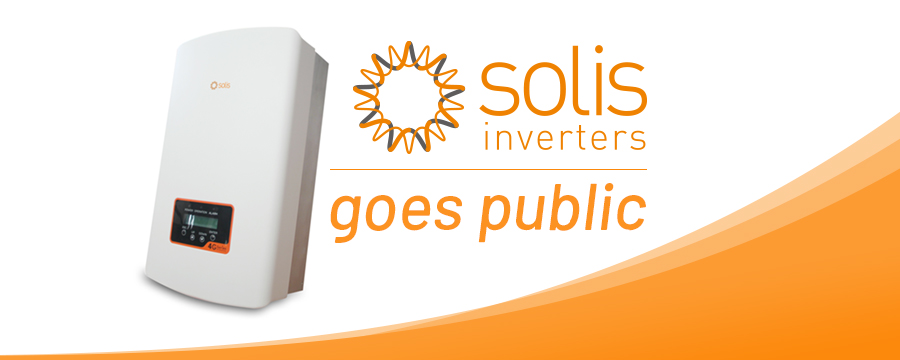
Solis celebrates another milestone!

The first string inverter company listed on the Shenzhen Stock Exchange

Reposted by PowerArk Solar / Original Source

Ginlong (Solis) has recently celebrated their accomplishment in being listed on the Shenzhen stock exchange as a public company. Being the first of its kind, the China-based company Solis, is the only stock listed company with the main business in the string inverted sector. Founded in 2005, Ginlong Solis has flourished to be a leading high-level technical research and development team, many of whom are deemed experts within the PV systems field. Until today, Solis’ stock value is over 4 billion RMB and will continue to prosper, which will further build the company’s rapport and credibility internationally.

Landing the stock code: 300763, Ginlong Solis technologies is publicly offering 20 million shares, including 20 IPO shares offered at approximately 26.64 Yuan per share.

Solis has distributed products to more than 80 countries around the globe. Their brand strategy focal point has always outlined product reliability and performance advantage against competitors. The top ten customers for Solis are mostly from Asia, Europe, United States of America, Australia and many more regions and countries throughout the world.

What does this mean for their business?

By going public on the Shenzhen stock exchange, this opportunity has given Solis the platform they needed to expand as a brand internationally. From this, the market will push the brand Solis to more countries around the globe. Having IPOs (initial public offerings) available means that Solis will have the ability to invest more frugally in new products for the Australian market. Solis is a business that customers can place their trust in and rely on for a long time. More solar research and innovation can come into the Australian solar industry via this new change, aiding and growing our current market.More and more business will grow from this positive action which will in the long term, give Solis the credibility and global recognition they need to prosper further into the trusted Australian Solar market. Australian’s will have the opportunity to invest in a well-known and trusted brand, bringing prosperities onto Australian soil.

Energy Stuff specialises in Residential Solar with emphasis on Repairs, Replacements and upgrades. We also provide new systems, battery storage, Small Commercial, Off-Grid systems and smart monitoring systems. Energy Stuff only uses CEC accredited installers and we fully comply with the Victorian Govt. Solar Rebate Program.

For further information please call us on 1300 656 205 or go to our website at http://www.energystuff.com.au

‘Blown away’: rooftop solar PV installations surge by almost half

Written by Peter Hannam / The Age / 14th April 2019

Australian rooftops added a record of almost 500 megawatts of new solar photovoltaic capacity in the March quarter, as Victoria’s incentive scheme stoked a 90 per cent increase in that state’s installations.

record of almost 500 megawatts of new solar photovoltaic capacity in the March quarter, as Victoria’s incentive scheme stoked a 90 per cent increase in that state’s installations.

Data gathered by Green Energy Markets show the sector added about 45 per cent more capacity of solar PV – in systems of 100 kilowatts or smaller in size – compared with the January-March period a year earlier.

“It’s usually a little bit slow in January and February but [previous records] have really been blown away,” said Tristan Edis, director of analysis at Green Energy Markets, a consultancy firm.

The first-quarter installations of about 482MW were led by Victoria, where the Daniel Andrews government’s $2250 rebate per unit helped propel that state above sunnier neighbours Queensland and NSW.

Green Energy Markets expects solar PV capacity on rooftop will top 2000MW this year, or about a quarter more than the previous record annual total achieved just last year.

Apart from the Victoria fillip for the PV market, consumers remain wary of high power prices since few have seen much relief from retailers. “That’s reinforcing the momentum,” Mr Edis said.

The additional solar panels added during the first quarter will deliver their owners a reduction in bills of more than $850 million over the next decade based on current electricity prices, he said.

The ongoing rally in renewable energy is greater in large-scale solar and wind farms, with more than 8100MW under construction. Victoria is also grabbing the lion’s share of the 20,000-plus jobs generated by these projects.

According to Green Energy Markets, Victoria has created 7580 jobs from the wind and solar farms being built. That tally is more than 52 per cent greater than the number of similar jobs in Queensland and almost double those being generated in NSW.

In March, renewable energy sources supplied about 19.7 per cent, or 3839 gigawatt-hours, of the electricity to the country’s main grids, the consultancy said. That supply was enough to power about 9.5 million homes, and saved the equivalent of about 2.7 million tonnes of carbon-dioxide.

The installation of small-scale solar PV totalled more than 23,000 last month, with the average size of residential units reaching 6.6 kilowatts. That section of the market employed some 7857 people in March, with Victoria’s 2134 pipping those in NSW and Queensland, with about 2000 in both.

If the rate of rooftop installations were to continue until 2022, the forecast extra generation of more than 10,000 gigawatt hours would alone top the annual electricity generated by AGL’s Liddell coal-fired power station. The Hunter Valley plant is scheduled to shut down that year.

The growth of the renewables sector could slow sharply in coming years without clearer energy policy, particularly at a national level.

The Australian Energy Market Operator has lately signalled it will penalise large-scale wind and solar projects that are being built in areas where there is limited grid capacity to absorb more.

The Renewable Energy Target, which has been the main support for new large-scale generation in recent years, may yet be met ahead of its 2020 goal.

Federal Labor backs the Turnbull government’s National Energy Guarantee as the overarching policy to replace the RET, while the Coalition is promising to help underwrite new generation capacity if re-elected.

Energy Stuff specialises in Residential Solar with emphasis on Repairs, Replacements and upgrades. We also provide new systems, battery storage, Small Commercial, Off-Grid systems and smart monitoring systems. Energy Stuff only uses CEC accredited installers and we fully comply with the Victorian Govt. Solar Rebate Program.

For further information please call us on 1300 656 205 or go to our website at http://www.energystuff.com.au